
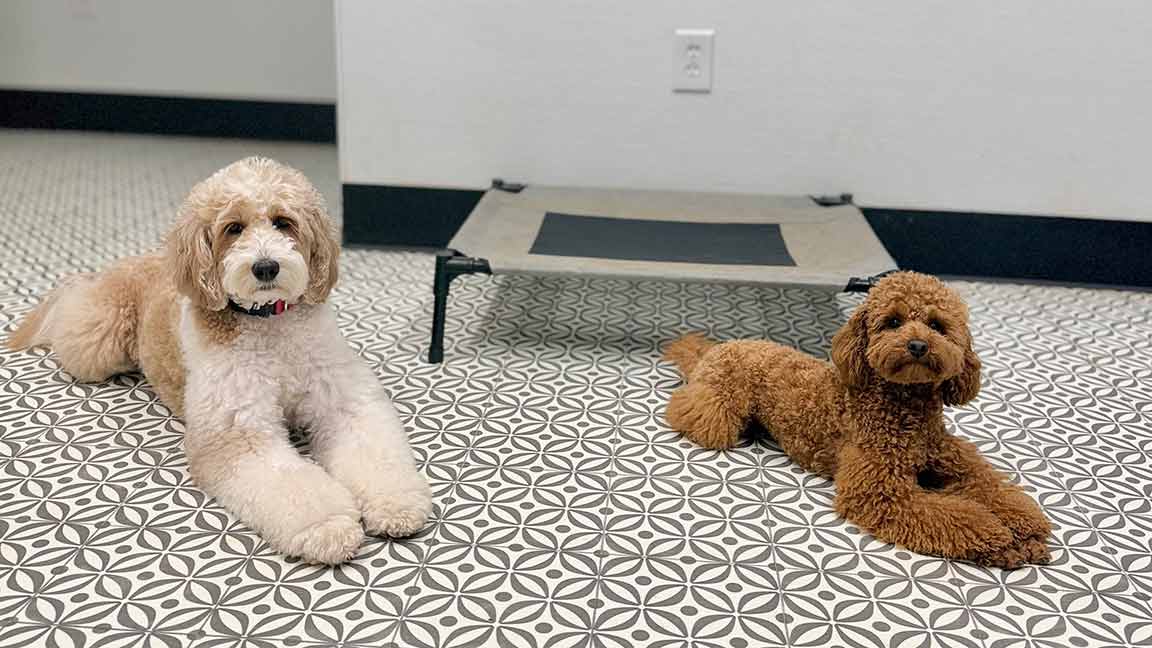
Why Consistency Matters in Dog Training
Why Consistency Matters in Dog Training
Consistency matters in dog training because dogs do not speak English. They speak patterns.
If the rules change depending on the day, your mood, or who is holding the leash, your dog is not being stubborn. They are confused. Clear, repeated expectations build confidence. Inconsistent expectations build anxiety.
At Double U Doodles, whether we are raising Bernedoodles, Sheepadoodles, BoykinDoodles, or Cavapoos, we see this principle play out every single time. Puppies thrive when the message stays the same.
Let’s break down why this matters so much.
Dogs Learn Through Repetition, Not Lectures
 Humans love to explain things. Dogs learn through repetition and consequence.
When consistency matters in dog training, it is because dogs rely on predictable cause and effect:
- Sit means sit every time
- No jumping means no jumping on anyone
- Crate time follows the same routine
- Potty breaks happen on schedule
If “sit” sometimes earns praise, sometimes gets ignored, and sometimes gets replaced with “down,” the dog does not know which behavior actually works.
Training becomes slower. Frustration increases on both sides.
Consistency Builds Security
Dogs are creatures of routine. Predictability lowers stress.
When consistency matters in dog training, it directly affects emotional stability. A puppy who knows these directions feels safe:
- Where they sleep
- When they eat
- What behavior earns a reward
- What behavior stops interaction
This is especially important in intelligent breeds like Doodles. Bernedoodles and Sheepadoodles are thinkers. Cavapoos are emotionally intuitive. BoykinDoodles are energetic and eager to please. All of them respond best when expectations are steady.
In our CheckPoint Puppy Program at Double U Doodles, structure and repetition are foundational. Puppies are not left guessing.
Inconsistency Creates “Problem” Behaviors
Many behaviors labeled as stubborn or naughty are actually training inconsistencies.
For example:
Jumping
If one family member encourages excited jumping and another scolds it, the dog learns that jumping works sometimes. So they keep trying.
Leash pulling
If pulling sometimes gets them to the park faster, the behavior is reinforced.
Barking
If barking occasionally results in attention, the dog will test it again.
Consistency matters in dog training because dogs repeat what works. If it works even occasionally, they will continue.
Everyone in the House Must Follow the Same Rules
One of the biggest mistakes families make is assuming the dog understands exceptions.

If the rule is no dogs on the couch, it cannot mean:
- No couch unless Dad is home
- No couch unless it is raining
- No couch unless guests are visiting
Dogs do not understand “sometimes.”
Before bringing home a puppy, we encourage families to agree on:
- Sleeping arrangements
- Furniture boundaries
- Feeding routines
- Command words
- Reward system
Clear communication between humans leads to clarity for the dog.
Consistency Speeds Up Training
When consistency matters in dog training, results come faster.
Why?
Because the dog receives the same feedback every time.
- Correct behavior is rewarded immediately
- Undesired behavior is redirected in the same way
- Commands are phrased consistently
- Timing remains predictable
This reduces confusion and strengthens neural pathways in the brain. Repetition with clear reinforcement literally wires the behavior into memory.
Science supports this. Dogs learn through associative conditioning. When the association is clean and repeated, learning accelerates.
Consistency Does Not Mean Harshness
Some people confuse consistency with strictness.
Consistency does not mean yelling.
It does not mean punishment.
It does not mean rigidity.
It means clarity.
At Double U Doodles, we emphasize positive reinforcement and structured guidance. Puppies respond beautifully when they understand what earns praise and what does not.
A calm, steady approach produces far better results than emotional reactions.
The Role of Routine in Puppy Development
Consistency matters in dog training, especially during the first year of life.

Puppies are developing:
- Bladder control
- Social confidence
- Emotional resilience
- Attention span
A predictable routine supports all of these.
For example:
Potty training improves dramatically when puppies are taken out:
- After waking
- After eating
- After play
- Before bedtime
Not randomly. Not occasionally. Consistently.
This is why our early structure matters so much before puppies ever go home.
What Happens When You Stay Consistent
When families commit to steady expectations, we see:
- Faster house training
- Less anxiety
- Stronger recall
- Reduced destructive behavior
- More confident social interactions
The dog relaxes because the world makes sense.
Consistency matters in dog training, not because dogs need control, but because they need clarity.
How to Stay Consistent in Real Life
Life gets busy. Here are practical ways to maintain structure:
- Use the same command words
- Keep training sessions short and daily
- Reward immediately when behavior is correct
- Redirect calmly and predictably
- Stick to feeding and potty schedules
Small daily habits produce big long-term results.
The Double U Doodles Philosophy
Our puppies are raised with structured beginnings through our CheckPoint Puppy Program. From early socialization to crate introduction and handling exercises, repetition and clarity are built into daily life.
By the time families take their puppy home, the foundation is already in place. Your job is not to start from zero. It is to continue what has already begun.
Consistency matters in dog training because it turns potential into reliability.
A well-bred, well-structured Doodle combined with consistent guidance becomes a calm, confident companion.
And that is the goal.

FAQ
Why does consistency matter in dog training so much?
Dogs learn through repetition and predictable consequences. Inconsistent rules create confusion and slow progress.
How can I be consistent with a busy schedule?
Stick to simple routines for feeding, potty breaks, and short daily training sessions. Even five focused minutes per day makes a difference.
What happens if family members use different commands?
Mixed signals delay learning. Agree on specific words and rules before starting training.
Does consistency help reduce anxiety?
Yes. Predictable structure lowers stress and builds confidence, especially in intelligent, sensitive breeds.
Can I change rules later?
You can, but transitions should be gradual and clearly reinforced to avoid confusing your dog.