Creating a Puppy-Safe Home: A Breeder’s Safety Checklist
Creating a Puppy-Safe Home: A Breeder’s Safety Checklist
Creating a puppy-safe home before your new doodle arrives is one of the most important things you can do to set your puppy up for a healthy, happy start. As breeders who live and breathe puppy care 24 hours a day, 7 days a week, we have seen firsthand what happens when a home is ready and what happens when it is not. The good news is that with a little preparation and the right checklist, you can have your space ready well before pickup day.
Why Puppy-Proofing Matters Before Day One
Here is something I learned early on in my nursing career that applies just as much to puppies as it does to patients: prevention is always easier than treatment. When I was working in the ER, so much of what we saw could have been avoided with a little forethought. The same is true for puppies coming home for the first time.
Your new puppy is curious, fearless, and completely unaware of danger. From the moment their paws hit your floor, they are exploring with their nose and mouth, climbing into spaces you never knew existed, and testing every boundary in sight. A puppy-safe home does not need to be a sterile or restrictive environment. It just needs to be a thoughtful one.
At Double U Doodles, we spend weeks preparing your puppy for the real world through our structured curriculum, including desensitization training, crate conditioning, and our complimentary 2-week puppy imprinting course. But the environment they come home to is just as important as the foundation we build here.
Room-by-Room Puppy Safety Checklist
Kitchen and Dining Areas
The kitchen is one of the highest-risk rooms in any home for a new puppy. Between cleaning products, human foods, and small items on the floor, there is a lot to address.
- Store all cleaning products, dish soap, and dishwasher pods in locked or latched lower cabinets
- Move trash cans inside a cabinet or invest in a trash can with a secure, puppy-proof lid
- Keep the following foods completely out of reach at all times: grapes, raisins, onions, garlic, xylitol (found in sugar-free gum and some peanut butters), chocolate, macadamia nuts, and avocado
- Secure any low cabinet doors with baby-proof latches, especially those containing food or chemicals
- Never leave food unattended on counters or tables during your puppy’s first weeks home
- Keep the dishwasher closed at all times since standing water and residual detergent are both hazards
Living Room and Common Areas
This is where your puppy will spend most of their time, so it deserves careful attention.
- Bundle and secure all electrical cords and charger cables out of chewing reach using cord covers or cord organizers
- Remove small decorative items, remote controls, and children’s toys from floor level
- Check that all houseplants are non-toxic; common toxic plants include pothos, philodendron, sago palm, aloe vera, and peace lily
- Anchor any tall or heavy furniture, like bookshelves and TV stands, that could be knocked over
- Block off fireplaces, open staircases, and any gaps behind large appliances or entertainment centers
- Use baby gates to restrict access to rooms or areas that are not yet puppy-proofed
Bedrooms and Closets
Bedrooms tend to collect small, chewable items that can be dangerous for puppies.
- Keep all shoes, socks, and clothing off the floor since fabric can cause intestinal blockages if swallowed
- Store all medications, supplements, and vitamins in closed drawers or medicine cabinets, never on nightstands
- Secure closet doors since puppies can get trapped inside and ingest items like mothballs, fabric softener sheets, or small accessories
- Check under beds for coins, rubber bands, hair ties, and other small items that could be swallowed
- Keep laundry baskets with lids or store them in a closed closet
Bathrooms
Even a small bathroom holds a surprising number of hazards.
- Always keep the toilet lid closed since small puppies can fall in and struggle to get out
- Store all personal care products, including shampoo, razors, cotton swabs, and dental floss, in closed cabinets
- Keep all medications locked away, even over-the-counter products like ibuprofen and acetaminophen, which are highly toxic to dogs
- Never leave standing water in a bathtub or sink unattended
Garage and Laundry Room
These spaces are among the most hazardous in the home and should be strictly off-limits to unsupervised puppies.
- Store all automotive products, including antifreeze, motor oil, and windshield washer fluid, on high shelves or in locked cabinets; antifreeze in particular has a sweet smell that attracts dogs and is fatal even in small amounts
- Keep all lawn and garden chemicals, fertilizers, pest control products, and herbicides completely inaccessible
- Store sharp tools, nails, screws, and hardware in closed toolboxes
- Always check that your puppy is not in the garage before backing out with your vehicle
- Keep the washer and dryer closed at all times and check inside before starting a cycle
Yard and Outdoor Spaces
A fenced yard feels puppy-safe, but there are hidden hazards that need to be addressed before letting your puppy explore.
- Walk your yard and identify any toxic plants such as azaleas, rhododendrons, foxglove, oleander, and yew
- Check your fence line for gaps, loose boards, or areas where a small puppy could squeeze through or dig under
- Store all yard chemicals, pesticides, and fertilizers in a locked shed or garage
- Keep mulch made from cocoa bean shells away from puppies since it contains theobromine, the same toxic compound found in chocolate
- Remove any standing water sources that could harbor bacteria or mosquito larvae
- Check for mushrooms growing in your yard after rain, since many common wild mushrooms are toxic to dogs
Setting Up a Safe Puppy Space Indoors
One thing we always recommend to our families is to start small. Your puppy does not need access to your entire home on day one. In fact, giving them too much space too soon can actually increase anxiety and make housetraining harder.
We begin crate training here at Double U Doodles at 6 weeks, with puppies spending 1 to 2 hours per day in their individual crates, learning to self-soothe and building positive associations with their space. By the time your puppy comes home, the crate is already familiar and comfortable to them.
Setting up a puppy zone in your home, a defined area using baby gates or an exercise pen with their crate, food and water bowls, and a few safe toys, gives your puppy a predictable, secure starting point. It also makes supervision much more manageable as they learn the rules of their new environment.
Puppy-Safe Home Essentials to Have Ready on Arrival Day
Beyond safety prep, having the right supplies on hand makes the transition smoother for everyone.
- A properly sized crate with a divider so it can grow with your puppy
- Food and water bowls at an appropriate height
- A bag of the same food your puppy has been eating here (we will let you know what that is, so you can avoid a sudden diet change)
- A few safe, size-appropriate chew toys and interactive toys
- Enzymatic cleaner for accidents
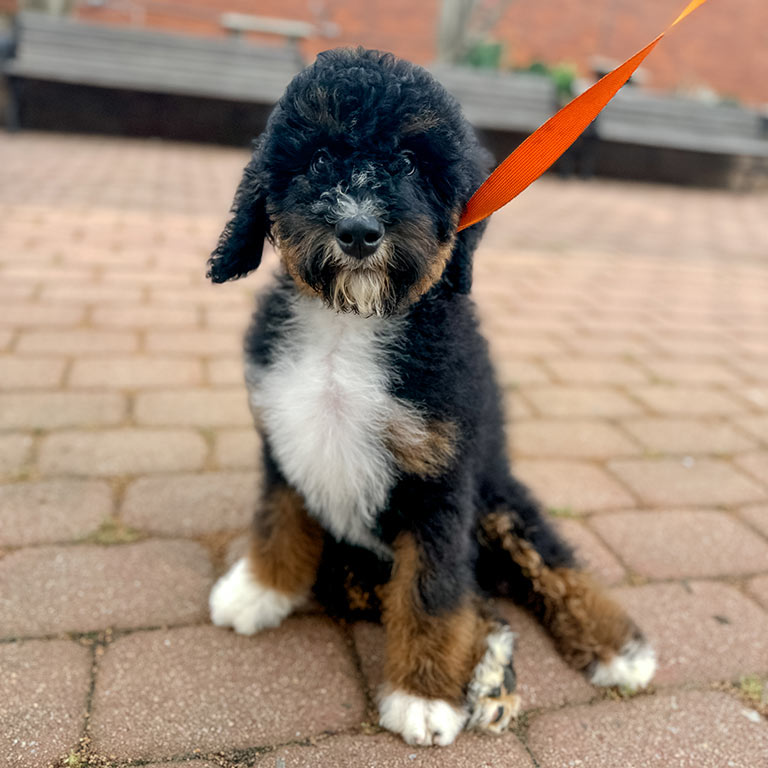
- A leash, a collar with an ID tag, and a harness
- Baby gates to manage room access
One note from our curriculum that we feel strongly about: we do not use pee pads or litter boxes at any point in your puppy’s training here. This is intentional. Teaching puppies to eliminate on something soft and square inside the house simply teaches them that your rugs are an acceptable option. Our puppies learn to use the doggy door and potty outside from as early as 4 to 6 weeks, working with their natural instincts rather than against them. We recommend carrying that same approach forward in your home.
A Note From Becca on Preparing With Intention
Before I left nursing, I spent years in settings where I had to think fast and act faster. What I carry with me from that chapter of my life into breeding is the mindset that preparation saves lives and saves stress. When our team here prepares your puppy, we are doing it with intention, from the weight checks at birth to the desensitization work in weeks three and four to the imprinting course in the final two weeks before your puppy goes home.
If you ever have questions about puppy-proofing, setting up your space, or anything related to your Double U Doodles puppy, we are always here. We did not get into this to hand over a puppy and disappear. We got into this because we love these dogs and we love the families who open their homes to them.
Frequently Asked Questions: Puppy-Safing Your Home
What does it mean to create a puppy-safe home?
It means identifying and securing hazards like toxic foods, chemicals, cords, and plants before your puppy arrives home.
What are the most dangerous household hazards for a new puppy?
Antifreeze, medications, toxic foods like grapes and chocolate, electrical cords, and toxic plants top the list.
Should I use baby gates to puppy-proof my home?
Yes. Starting with a defined puppy zone and expanding access gradually is easier on both the puppy and your family.
How do I set up a crate for a new puppy?
Choose a size-appropriate crate with a divider, add a soft blanket and safe toy, and place it in a quiet but social area.
Are pee pads a good idea for a new puppy?
No. They teach puppies to eliminate inside, which transfers to your rugs. Our puppies learn outdoor potty habits from weeks 4 to 6.
What plants are toxic to puppies and should be removed from my home?
Indoors: pothos, sago palm, aloe, peace lily. Outdoors: azalea, oleander, foxglove, and yew.
How early should I start puppy-proofing my home?
Start puppy-proofing one to two weeks before pickup day, so you have time to gather supplies and address anything unexpected without feeling rushed.