Puppy Proofing Checklist: Prepare Your Home for a Puppy
Puppy Proofing Checklist: Prepare Your Home for a Puppy
Bringing a new puppy home is one of the most exciting days a family can have, and a little preparation beforehand makes it go a lot more smoothly. At Double U Doodles, we tell every family the same thing: puppies explore the world with their noses and mouths, which means your home suddenly becomes one big adventure playground, cords, shoes, and all. Getting your space ready before go-home day protects your puppy from real hazards and saves you a few headaches too. Here’s our room-by-room puppy proofing checklist to help you get started.
Kitchen
The kitchen tends to have more hidden hazards than any other room in the house.
- Move trash cans behind a cabinet door or invest in a locking lid, since food scraps and packaging can cause choking or blockages
- Secure cabinet doors, especially ones holding cleaning supplies, with childproof latches
- Keep cords from appliances like toasters and coffee makers tucked away or out of reach
- Store human food out of counter and floor reach, especially chocolate, grapes, onions, and anything containing xylitol
- Put pet food and treats in a sealed, puppy-proof container so your puppy can’t self-serve
Living Room
This is usually where your puppy will spend the most supervised time, so it’s worth a careful sweep.
- Bundle or cover any exposed electrical cords, a common chew target for teething puppies
- Move small objects like remotes, coins, and phone chargers up out of reach
- Check houseplants against a list of pet-safe plants, since several common varieties are toxic if chewed
- Add corner protectors to sharp furniture edges if your puppy will be zooming around at full speed, which they will
- Set up a designated puppy zone with a crate or playpen where they can settle when you can’t watch them directly
Bedrooms and Bathrooms
Bedrooms and bathrooms hold some of the most dangerous items for a curious puppy, so don’t skip this step even in rooms your puppy won’t spend much time in.
- Store medications, vitamins, and cosmetics in closed cabinets, never on a nightstand or counter within nose height
- Keep the toilet lid closed and cleaning chemicals stored up high
- Move laundry, including socks and anything with drawstrings, off the floor and out of hamper reach
- Tuck away shoes, since they’re a favorite chew target and a genuine choking hazard in pieces
Yard and Outdoor Spaces
Outdoor spaces need just as much attention as the inside of your home.
- Walk your fence line looking for gaps or loose boards a puppy could squeeze through or dig under
- Remove or fence off toxic plants, mulch, and mushrooms that might tempt a curious nose
- Store garden chemicals, fertilizer, and antifreeze well out of reach, since even small amounts can be fatal
- If you have a pool, make sure it’s fenced or covered until your puppy is confident swimming and knows where the exit steps are
- Set up a designated potty area early, so your puppy learns exactly where they’re expected to go
Garage and Laundry Room
These spaces often get overlooked during puppy-proofing, but they’re some of the riskiest in the house.
- Store antifreeze, motor oil, and paint on high, secured shelving, since antifreeze in particular is highly toxic and unfortunately appealing to dogs
- Keep small tools, nails, and screws swept up and out of paw’s reach
- Close the dryer door after every load, since warm, dark spaces are surprisingly tempting for a puppy looking for a nap spot
How We Get Puppies Ready for Your Home Before Go-Home Day
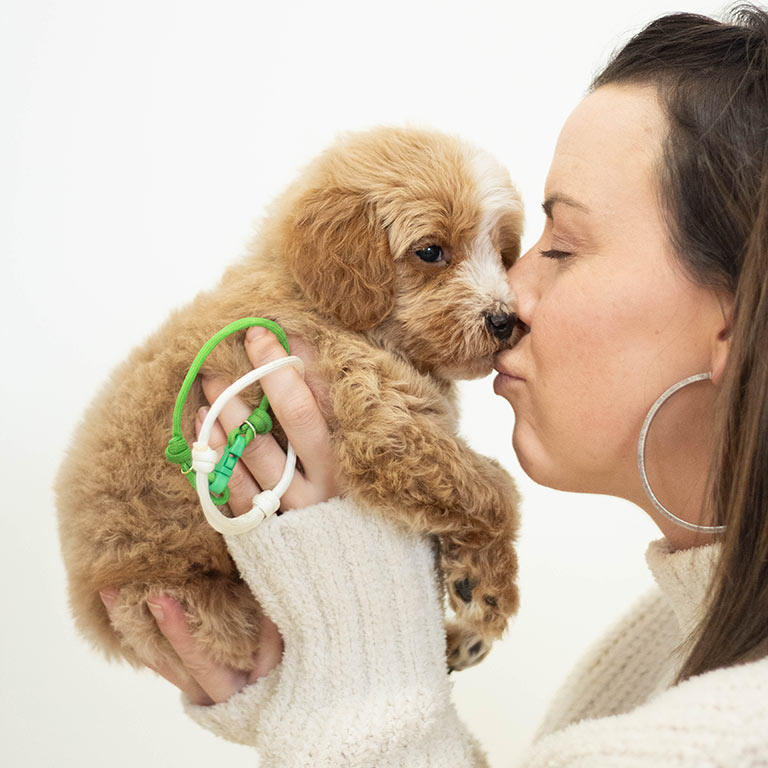
Puppy proofing your home is half the equation; the other half is a puppy who’s already been prepared for the transition, and that’s something we work on long before your Double U Doodle puppy ever leaves our nursery. Starting at 4 to 6 weeks old, our puppies begin doggy door training, learning to potty outside rather than on pads or newspaper indoors, which makes the adjustment to your home’s layout much smoother. We never use pee pads for this exact reason: a puppy taught to potty on something square indoors doesn’t know the difference between a pad and your favorite rug once they’re in your home.
By weeks 6 to 8, puppies are also spending 1 to 2 hours a day in individual crate training, away from their littermates, so the crate already feels familiar and safe rather than like a foreign, isolating experience. Combined with the puppy-proofing you do at home, this early groundwork means your puppy arrives already halfway prepared for the routines and boundaries you’re setting up. You can read more about the full curriculum on our Checkpoint Training page.
Puppy-Proofing Supplies Worth Having on Hand
A few supplies make the whole process easier and give your puppy safe, appropriate outlets from day one:
- A properly sized crate for house training and safe alone time
- Baby gates to block off staircases or rooms that aren’t puppy-ready yet
- A variety of durable chew toys to redirect teething energy away from furniture and shoes
- Non-tip food and water bowls to cut down on spills
- Cord protectors or cord bundlers for any cords you can’t fully remove from reach
Common Puppy-Proofing Mistakes
A few things trip up even well-prepared families. Puppy-proofing only the rooms a puppy will spend the most time in, then being surprised when they wander into an unproofed hallway or garage, is a common one. Assuming a puppy “won’t reach that” underestimates just how far a determined, growing puppy can stretch, jump, or climb within a few weeks. And forgetting to re-check your setup as your puppy grows means hazards that were once out of reach can suddenly become accessible again.
Frequently Asked Questions
What is puppy proofing?
Puppy proofing means removing or securing anything in your home that could hurt a curious puppy, from cords and cleaning chemicals to small objects and toxic plants.
How long before go-home day should I puppy proof my home?
Start at least a week or two before pickup, so you have time to test your setup and make adjustments before your puppy actually arrives.
What household items are most dangerous to puppies?
Cleaning chemicals, medications, antifreeze, cords, and small objects like coins or batteries are among the most common causes of puppy emergencies.
Do I need to puppy proof outdoor spaces too?
Yes, fencing gaps, toxic plants, garden chemicals, and unsecured pools are just as important to address as the inside of your home.
How do you prepare puppies for the transition to a new home?
Our puppies begin doggy door training at 4-6 weeks and individual crate training at 6-8 weeks, so the habits and routines they’ll need are already familiar.
A safe, well-prepared home makes all the difference in how smoothly your puppy settles in, and it pairs perfectly with the groundwork we’ve already laid before go-home day. If you’re ready to bring one of our puppies home, see our available puppies or check out our pricing and terms for details on deposits and training packages.