Your Puppy’s First Year: A Month-by-Month Development Timeline
Your Puppy’s First Year: A Month-by-Month Development Timeline
At Double U Doodles, we spend the first weeks of every puppy’s life laying groundwork that carries them well past go-home day. A lot happens in a puppy’s first year, physically, behaviorally, and developmentally, and knowing roughly what to expect at each stage makes the whole year easier to navigate. Here’s a month-by-month look at what your puppy is going through, from the day they’re born through their first birthday.
Month 1: The First Four Weeks
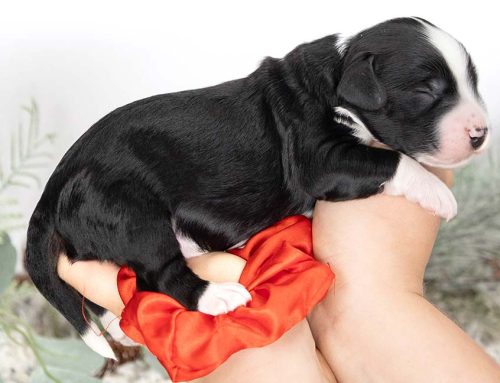
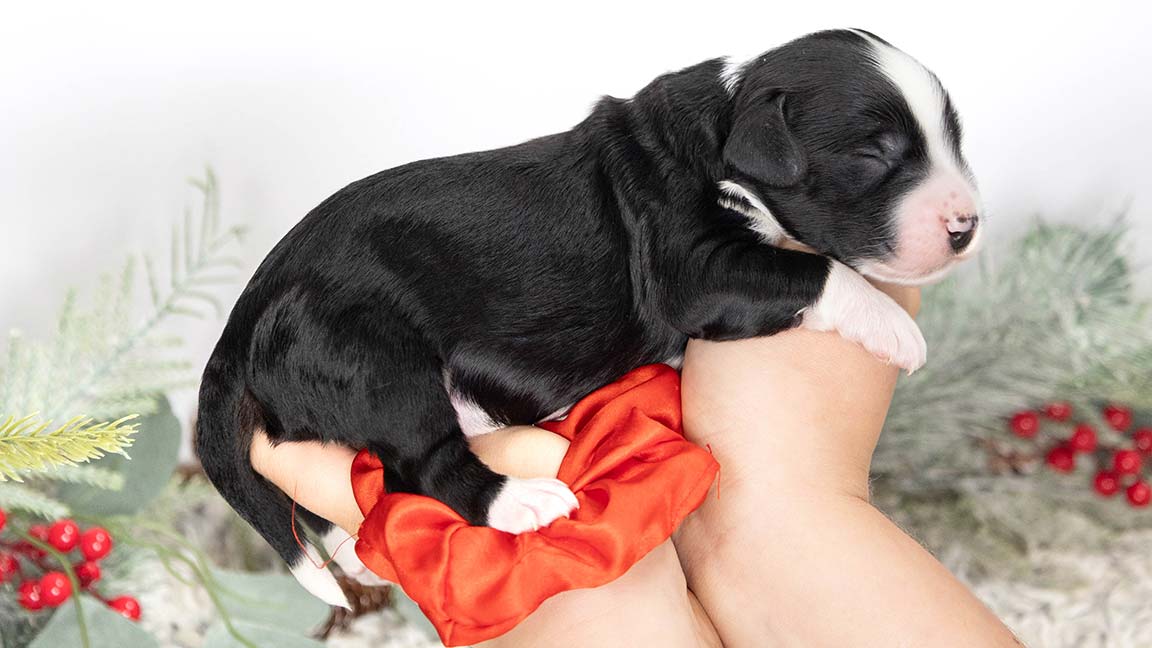
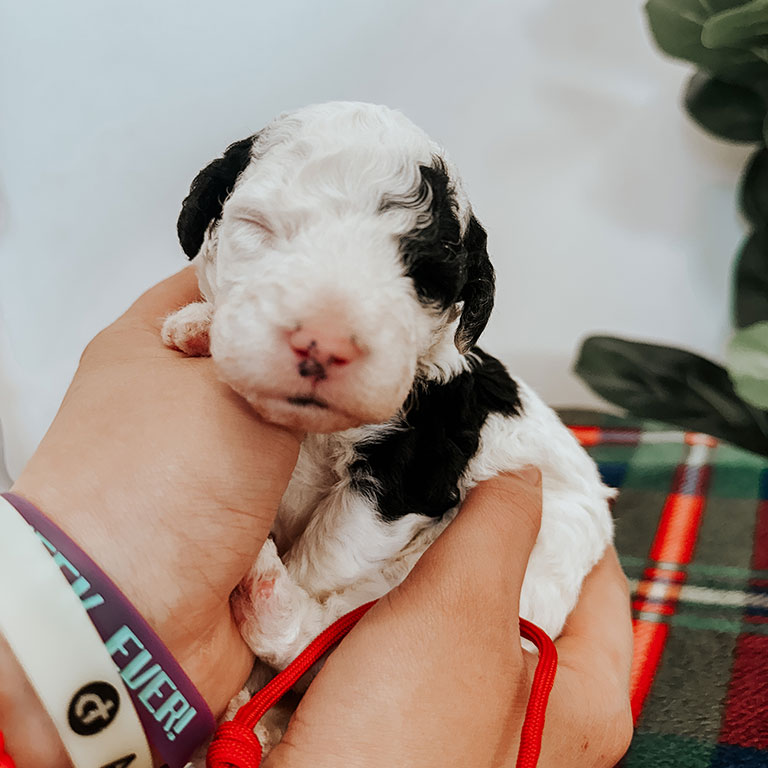
This stage happens entirely in our care, before your puppy ever meets your family. From birth, our focus is weight gain, and puppies are weighed twice a day until they’ve surpassed their birth weight. Starting around week 1, we begin Early Neurological Stimulation, gently holding puppies upright, upside-down, and on their backs while handling their paws, ears, and belly to introduce them to the sensation of touch.
- Eyes and ears are closed at birth and begin opening around 2 weeks
- Puppies are entirely dependent on their mother for warmth and nutrition
- Daily handling during this window has lasting benefits for temperament and stress tolerance later in life
Month 2: Weaning, the Doggy Door, and Crate Training
Weeks 4 through 8 are some of the busiest of the entire first year. We begin weaning puppies onto mash and kibble, and around week 4, doggy door training starts so puppies learn to potty outside rather than on pads or newspaper. We never use pee pads for exactly this reason: a puppy taught to go on something square indoors doesn’t know the difference between a pad and your living room rug once they’re home. By week 6, puppies begin 1 to 2 hours of daily individual crate training away from their littermates, building comfort with alone time before it’s ever needed at your house.
- Baby teeth begin coming in, and gentle chewing behavior starts to appear
- Puppies become much more mobile, playful, and vocal with littermates
- Every puppy completes Checkpoint 1 of our training program before leaving the nursery
Go-Home Day and Optional Extended Training
Most of our puppies go home around 10 weeks old, once Checkpoint 1 is complete. Some families choose to extend their puppy’s stay with us through Checkpoint 2 or Checkpoint 3, which continues obedience, leash, and potty training through 12 or 16 weeks. You can compare what’s included in each package on our Checkpoint Training page or review pricing on our terms page.
Month 3: Settling Into Your Home
Whether your puppy comes home at 10 weeks or later through an extended package, the first few weeks in a new home are an adjustment for everyone. This is also a critical window for continued socialization, since a puppy’s primary socialization period closes around 14 to 16 weeks.
- Schedule a vet visit within the first week to establish care and continue the vaccine series
- Keep introducing new people, environments, and gentle experiences while your puppy is still highly impressionable
- House training habits from our program carry over well, but consistency in your own routine matters just as much
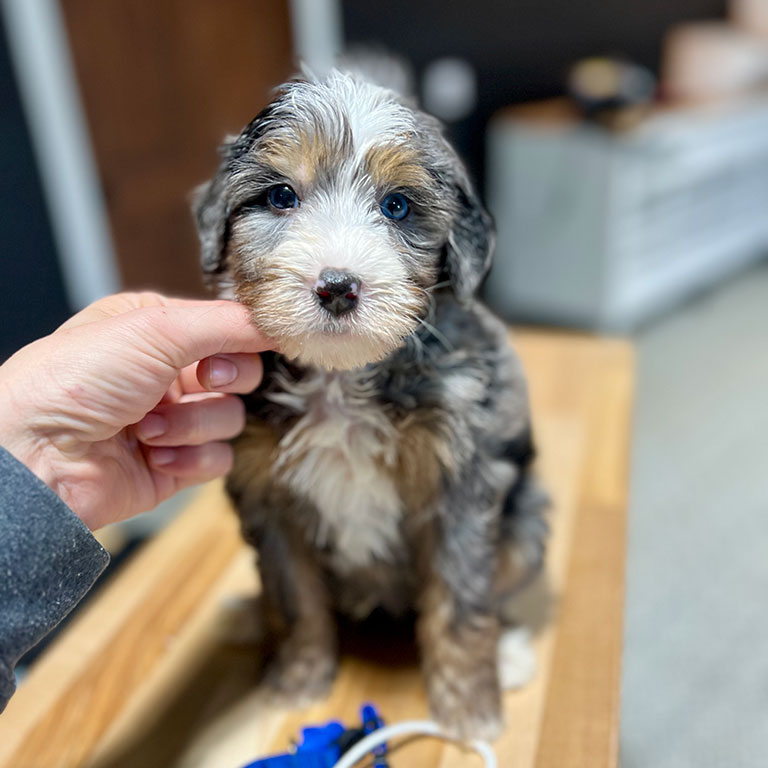
Month 4: Teething and Continued Training
Around 4 months, puppies start losing baby teeth as adult teeth come in, which means chewing tends to ramp up significantly.
- Provide plenty of appropriate chew toys to protect furniture and shoes
- Continue reinforcing basic commands in short, frequent sessions
- Some puppies show mild discomfort from teething; cold, textured chew toys can help
Month 5: A Fast Growth Phase
This is typically a stretch of rapid physical growth, and energy levels often climb right along with it.
- Exercise needs increase, though it’s still important not to over-exercise growing joints, especially in larger doodle mixes
- Continued socialization and structured play help channel growing energy productively
- Coat texture may begin subtly shifting from the soft puppy coat toward what will eventually become their adult coat
Month 6: Adolescence Begins
Six months is often when the “teenage phase” starts, and many families are caught off guard by it. Training that seemed solid can suddenly look shakier as puppies test boundaries and independence.
- A second fear period is common around this age, so avoid forcing your puppy into overwhelming situations
- This is also the age many vets recommend discussing spay or neuter timing, based on your puppy’s size and breed
- Consistency, not more pressure, is what gets training back on track during this stretch
Month 7: Navigating the Teenage Phase
Adolescence tends to continue through this month, and patience is genuinely the most useful tool you have.
- Selective hearing and testing limits are normal, not a sign that earlier training failed
- Keep reinforcing the same rules and cues everyone in the household uses consistently
- Longer walks and more structured mental stimulation help burn off the extra energy this stage brings
Month 8: Building on Obedience
By this point, most puppies are ready to build on foundational commands with a bit more complexity.
- Practice commands in new locations and around distractions, not just at home
- Off-leash recall, in a safely enclosed area, is a great skill to start layering in
- Mental enrichment, like puzzle toys or scent games, helps tire out an increasingly capable mind
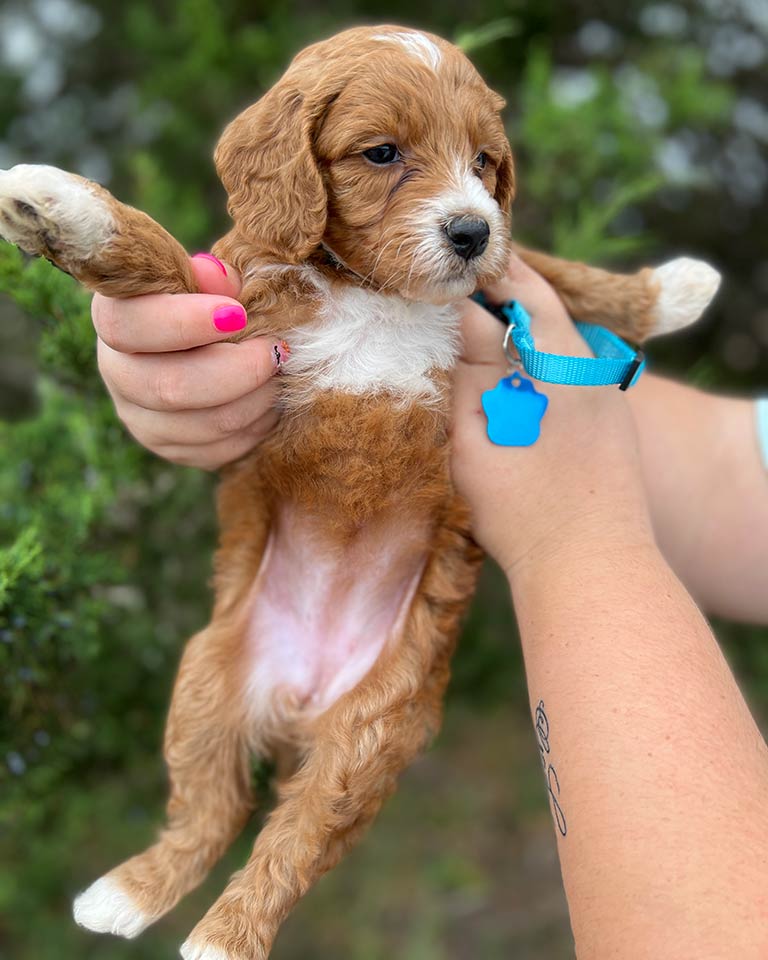
Month 9: Coat Change and Grooming Needs
For doodle puppies specifically, this is often when the puppy coat starts transitioning into the denser, more textured adult coat.
- Matting risk increases significantly during a coat change, so brushing frequency should increase too
- A professional groom around this stage can help manage the transition and catch mats before they become a bigger problem
- Shedding patterns may shift, even though most doodle coats remain low-shedding overall
Month 10: Adult Habits Start to Settle
Energy levels often begin to feel slightly more predictable by this point, even if your puppy is still very much a puppy at heart.
- Personality traits that will carry into adulthood become more apparent
- Training reinforcement, rather than new skill-building, is often the main focus now
- Continue regular vet check-ins to track healthy growth and weight
Month 11: Almost a Year
The home stretch before the first birthday is a good time to take stock of how far your puppy has come.
- Review vaccination and preventive care schedules with your vet to confirm everything is current
- Most puppies are approaching, though not always fully at, their adult size and weight
- Training habits built consistently over the past several months should feel noticeably more reliable now
Month 12: Your Puppy’s First Birthday
Many puppies are close to their adult size by their first birthday, though larger breeds and mixes can continue filling out for several more months. This is a natural point to transition to an adult food formula, in consultation with your vet, and to reflect on just how much your puppy has grown since that very first weigh-in during their earliest days with us.

Frequently Asked Questions
When is a puppy considered fully grown?
Smaller breeds often reach adult size by 9 to 12 months, while larger breeds and mixes can continue growing until 18 months or later.
When does the teenage phase start in puppies?
Adolescence typically begins around 6 months and can last through 18 months, often bringing testing behavior and training setbacks.
When should I start puppy training?
Training begins the moment your puppy is born. At Double U Doodles, structured training starts well before puppies ever leave our care.
Why does my puppy’s coat seem to be changing?
Many doodle puppies go through a coat change around 6 to 12 months, transitioning from a soft puppy coat to a denser adult texture.
When should I talk to my vet about spay or neuter timing?
Most vets recommend this conversation around 6 months, though ideal timing depends on your puppy’s breed, size, and individual health.
Watching a puppy grow through their first year is one of the best parts of bringing a new dog into your family, and the groundwork we lay in those very first weeks helps set the tone for everything that follows. If you’re ready to start this journey, see our available puppies or learn more about our Checkpoint Training program.