Dog Nose Prints: Why They’re as Unique as Fingerprints
Dog Nose Prints: Why They’re as Unique as Fingerprints
Yes, dog nose prints are unique to each individual dog, made up of a pattern of ridges, lines, and bumps that forms before birth and stays the same throughout a dog’s life, similar to how human fingerprints work.
At Double U Doodles, we spend a lot of time close up with puppy noses, from health checks to simple snuggles, and dog nose prints come up as a genuinely fun fact families love learning when they visit to meet their breeder. That wet, textured surface is doing a lot more than looking cute, and dog nose prints are one of the more fascinating parts of canine anatomy.
What Makes Dog Nose Prints Unique
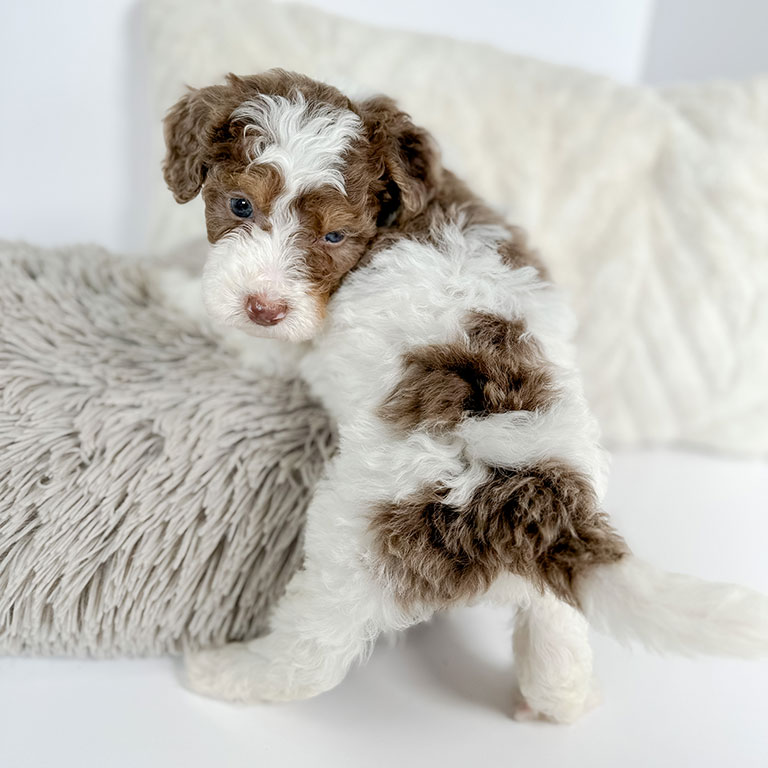
Dog nose prints get their individuality from the pattern of ridges and grooves on the surface of the nose, sometimes called the rhinarium. According to psychologist Stanley Coren, writing for Psychology Today, a study of dog nose prints found that the pattern is well established by around two months of age and remains unchanging over at least the first year of life, which supports the idea that dog nose prints work similarly to human fingerprints for identification purposes.
Why Dog Noses Are Wet in the First Place
Understanding dog nose prints starts with understanding why dog noses are wet at all. VCA Animal Hospitals explains that special glands inside a dog’s nose produce mucus to keep the nasal canals moist, and that moisture actually helps scent particles stick, improving a dog’s already remarkable sense of smell. The American Kennel Club notes that dogs also lick their noses regularly to keep them clean and moist, since scent particles stick better to a damp surface than a dry one.
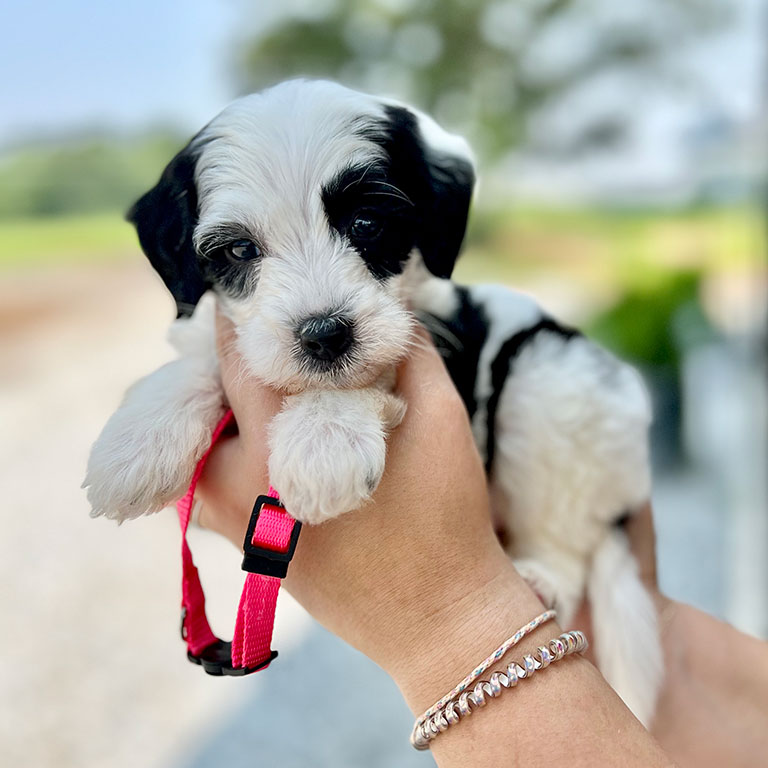
The Science Behind a Dog’s Sense of Smell
Dog nose prints are just one small part of an incredibly sophisticated sensory organ. PBS NOVA’s look at canine scenting ability notes that a dog’s sense of smell is between 10,000 and 100,000 times as potent as a human’s, thanks in part to up to 300 million olfactory receptors packed into that same textured surface where a nose print forms. This is closely tied to why our scent games are such a popular form of enrichment, since a dog’s nose is genuinely their primary way of understanding the world.
Can Dog Nose Prints Really Identify a Lost Dog?
Historically, dog nose prints have been used as a form of identification. Some kennel clubs internationally have accepted nose prints as proof of a dog’s identity for decades, treating dog nose prints the way fingerprints are used for people. That said, microchipping remains the most reliable and widely used method for identifying a lost dog today, since it does not rely on someone having a reference print on file to compare against. This is one of the reasons we talk about identification and lifelong support during how we raise our puppies, since it is part of setting every puppy up for a safe life long after they leave our farm.
How Dogs Use Their Noses to Communicate
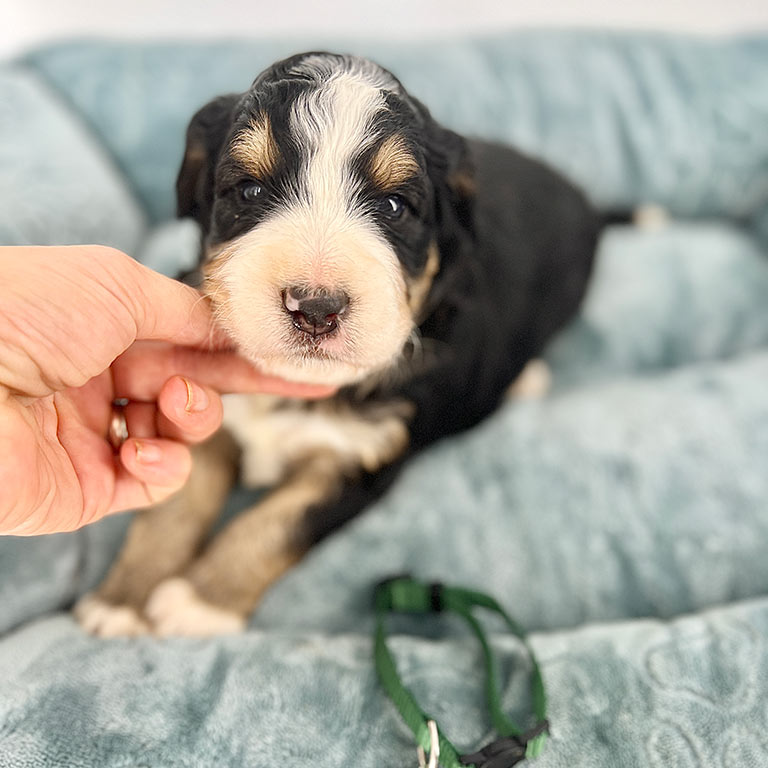
Beyond identification, a dog’s nose plays a huge role in communication and daily life. Merck Veterinary Manual notes that dogs interact with each other and with people through scents in addition to body postures and vocalizations, gathering far more information through smell than we can even imagine. It is one of many reasons we pay close attention to sniffing behavior when we assess a puppy’s stress signals, since a sudden change in nose activity can sometimes be an early clue that something is off.
A Story From Our Farm
One of our favorite little rituals with new litters is running a finger gently across each puppy’s nose to feel the difference in texture from one pup to the next, long before we ever explain dog nose prints to a new family during our Checkpoint Training program. We once had a family whose puppy had an especially distinctive nose pattern with a deep groove right down the center, and years later they still send us photos joking that they could pick their dog out of a lineup by nose alone. It is a small, fun reminder of just how individual every puppy truly is, right down to the smallest details.
Frequently Asked Questions
Do all dogs have unique nose prints?
Yes, the pattern of ridges and grooves on a dog’s nose is unique to that individual dog, similar to how human fingerprints work.
At what age does a puppy’s nose print become permanent?
Research suggests a dog’s nose print pattern is well established by around two months of age and stays consistent through at least the first year of life.
Is nose printing used to identify lost dogs?
It has been used historically by some kennel clubs, but microchipping is now the more common and reliable method for identifying a lost dog.
Why are dog noses usually wet?
A dog’s nose stays wet from mucus produced by glands inside the nasal passages, which helps scent particles stick and improves their sense of smell.
Can a dog smell separately with each nostril?
Yes, dogs are able to process scent information from each nostril somewhat independently, which helps them determine the direction a smell is coming from.