Doodle Allergy Myths: What Allergy Sufferers Should Know Before Adopting
Doodle Allergy Myths: What Allergy Sufferers Should Know Before Adopting
If you have ever typed “doodle allergy” into a search bar at midnight while holding a tissue box, you are not alone. The short answer is this: no dog is completely allergen-free, but many Doodles are significantly more allergy-friendly than heavy-shedding breeds when responsibly bred and properly maintained.
Now let’s separate internet myths from real science.
At Double U Doodles, we work with Bernedoodles, Sheepadoodles, BoykinDoodles, and Cavapoos, and allergy questions come up constantly. Some families assume Doodles are magic. Others assume the whole hypoallergenic label is fake. The truth lives in the middle, and it is backed by biology.
Myth 1: Doodles Are 100 Percent Hypoallergenic
 Let’s clear this up first.
There is no such thing as a completely hypoallergenic dog. Dog allergies are triggered primarily by proteins found in:
- Dander
- Saliva
- Urine
The main culprit is a protein called Can f 1, which is produced in the skin and saliva. When dogs shed dander into the environment, that protein spreads.
So where does doodle allergy confusion come from?
Poodles, one of the parent breeds in Doodles, have a continuously growing coat that sheds very little. Less shedding means less dander released into the air and onto furniture. When a Doodle inherits that low-shedding coat, many allergy sufferers notice a dramatic improvement in symptoms.
But improvement does not equal zero allergens.
Myth 2: All Doodles Are the Same for Allergies
Not all Doodles are created equal when it comes to coat type.
A Doodle’s coat can range from:
- Straight and shedding
- Wavy fleece
- Tight curly
Curlier coats tend to trap dander more effectively and shed less into the environment. Stiffer coats may shed more hair and release more allergens.
This is why coat prediction and selection matter.
At Double U Doodles, we carefully evaluate coat genetics when pairing parents. We aim for low to non-shedding fleece or curly coats, especially for families concerned about doodle allergy sensitivity. Responsible breeding is not just about looks. It is about predictability and long-term compatibility.
Myth 3: If You Have Allergies, You Cannot Own a Dog
 This one keeps too many families from even trying.
Research shows that allergy severity varies dramatically between individuals. Some people react strongly to certain breeds but not others. Others improve with environmental management strategies.
Practical steps that reduce doodle allergy reactions include:
- Frequent grooming and brushing
- HEPA air purifiers
- Washing bedding weekly
- Keeping dogs out of bedrooms
- Regular bathing with a gentle shampoo
Interestingly, early exposure to dogs in childhood has been associated with reduced allergy development in some studies. The immune system is complex. It does not operate on absolutes.
Myth 4: Generation Does Not Matter
In reality, generation often influences coat consistency.
For example:
- F1 Doodles may have more coat variation
- Multigenerational Doodles tend to have more predictable, low-shedding coats
At Double U Doodles, we place a strong emphasis on coat quality and allergy-friendliness in our program. Through intentional multigenerational breeding and the Check Point Puppy Program, we prioritize not just temperament and structure, but coat reliability.
Families with allergy concerns deserve transparency, not marketing slogans.
What Actually Causes a Doodle Allergy Reaction
If someone reacts to a Doodle, it is rarely the hair itself that causes the reaction. Hair is not the allergen. The protein in dander and saliva is.
Common triggers include:
- Dogs licking skin
- Face-to-face contact
- Accumulated dander in carpets
- Poor ventilation
This means lifestyle plays a role.
A well-groomed, low-shedding Bernedoodle living in a clean home with air filtration will produce far fewer airborne allergens than a heavy-shedding breed with minimal maintenance.
Science supports this. Lower-shedding breeds release fewer allergens into the environment, even though they still produce the protein.
Are Certain Doodle Types Better for Allergy Sufferers
Generally, Doodles with more Poodle influence and curlier coats are more compatible with allergy-sensitive homes.
In our experience at Double U Doodles:
- Bernedoodles with fleece or curly coats perform well
- Sheepadoodles often have allergy friendly coats when multigenerational
- Cavapoos with strong Poodle traits can be excellent for sensitive families
No ethical breeder should guarantee zero reaction. What we can do is guide you toward the coat type most likely to work for your specific situation.
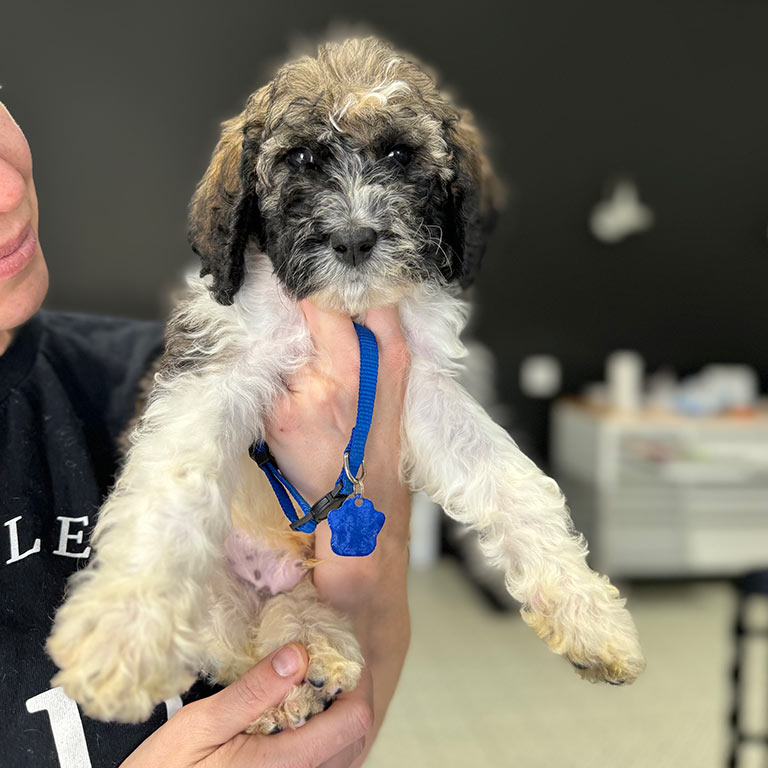
The Importance of Meeting the Puppy First
Before adopting, we strongly recommend:
- Spending time with the specific puppy
- Having allergy-prone family members interact directly
- Waiting 24 hours after exposure to monitor symptoms
Real-world exposure tells you more than online claims ever will.
Our goal is long-term success, not short-term excitement.
Grooming and Maintenance Matter
Low-shedding coats require maintenance. This is the trade-off.
To minimize doodle allergy triggers:
- Brush several times per week
- Schedule professional grooming every 6 to 8 weeks
- Keep ears and face clean
- Maintain a healthy coat with proper nutrition
A neglected coat can trap oils and dander, worsening symptoms. Proper care makes a measurable difference.
The Double U Doodles Approach
We raise our puppies with structure, socialization, and intentional pairing. Our CheckPoint Puppy Program builds confidence and adaptability, which helps puppies transition smoothly into allergy-sensitive homes.
We also:
- Select parents with reliable, low-shedding coats
- Focus on multigenerational consistency
- Provide guidance on grooming and home management
- Encourage honest conversations about allergy history
We would rather help a family make the right choice than promise something unrealistic.
The Bottom Line on Doodle Allergy Concerns
If you are worried about doodle allergy issues, here is the truth:
- No dog is completely allergen-free
- Low-shedding coats reduce environmental allergens
- Genetics and generation matter
- Grooming and home environment matter
- Responsible breeding improves predictability
For many allergy sufferers, a well-bred Doodle is a life-changing compromise between loving dogs and loving clear sinuses.
If you are considering a Bernedoodle, Sheepadoodle, BoykinDoodle, or Cavapoo from Double U Doodles and have allergy concerns, we are happy to talk through coat types, family history, and realistic expectations.
The right puppy should fit your home and your health.
FAQ
Can someone with allergies live comfortably with a Doodle
Many people can, especially with low shedding coats and good environmental management, but individual sensitivity varies.
Are Doodles truly hypoallergenic
No dog is completely hypoallergenic, but many Doodles shed significantly less and release fewer airborne allergens than heavy shedding breeds.
Which Doodle is best for allergy sufferers
Multigenerational Doodles with curly or fleece coats and strong Poodle influence are typically more allergy friendly.
Does grooming reduce doodle allergy symptoms
Yes. Regular brushing, bathing, and professional grooming reduce dander buildup and help control allergens in the home.
Should I test before adopting
Yes. Spending time with the specific puppy is the most reliable way to gauge your personal reaction before making a commitment.