Mature and Senior Care for Doodles: What Changes at Age 7+
When a Bernedoodle or Sheepadoodle enters the seven-and-up stage, we start seeing the gentle transition into their mature years. Around here at Double U Doodles, we notice it first in small ways. A dog who used to sprint out the door now stretches before taking off. A confident puppy from our Check Point Puppy Program grows into a calm, thoughtful companion. This is where senior care for doodles matters most, because the earlier we support these changes, the better their golden years feel.
What Age Seven Typically Looks Like
Our families often ask us what to expect as their doodle grows older. Every dog is unique, but there are patterns you can prepare for.
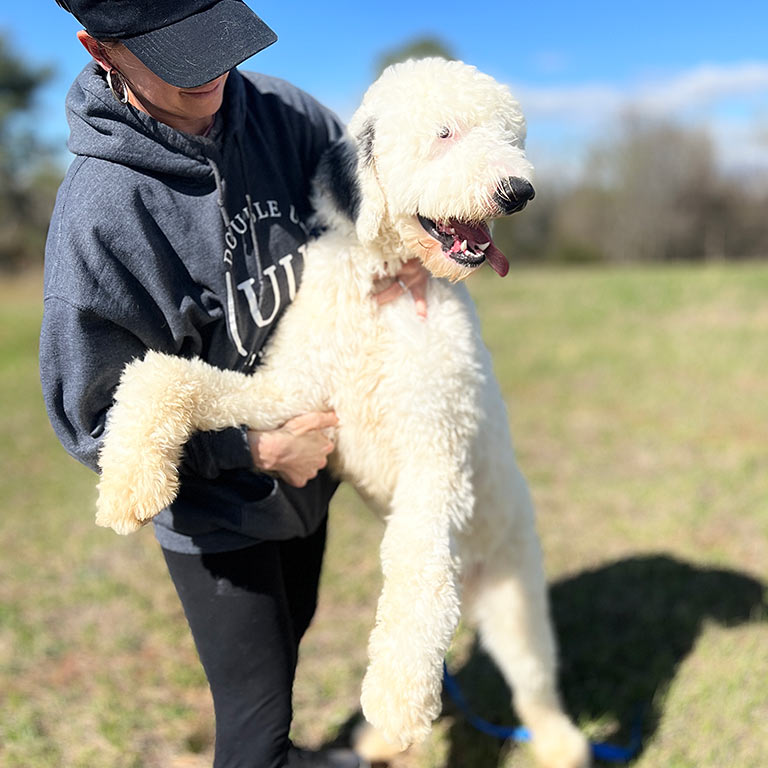
A softer pace
Seniors still love adventures, but they move through the world in a more relaxed way. If you are used to high-energy outings, you may find your older doodle choosing a slow stroll or spending more time lounging with you. This is a great opportunity to explore calm enrichment ideas that pair well with their energy levels.
Mild joint stiffness
Bernedoodles and Sheepadoodles are strong, athletic dogs, but age eventually catches up with them. When senior care for doodles becomes part of your routine, you may notice they hesitate before hopping into the car or taking the stairs. This is a normal early sign of aging, and you can support it with gentle exercise and joint-friendly habits.
Shorter bursts of excitement
Seniors still get the zoomies, just not as often. Most families find that a few smaller exercise sessions spread throughout the day keep their doodle comfortable.
Coat and skin changes
Older doodles may have softer, thinner coats or more sensitive skin. This is a great time to revisit your grooming routine and consider scheduling regular trims to make coat care easier.
Emotional Changes We See in Our Senior Doodles
Closer bonding
Older doodles often grow even more attached to their people. They follow us from room to room, sleep closer than before, and seem to lean into companionship.
A little cognitive slowing
It may take your senior doodle an extra moment to respond to a cue, or they may pause to think before moving toward you. It is subtle, but common.
Stronger preference for predictable routines
The puppies we raise through structured early learning eventually reach a stage where they want quiet, dependable days. The foundation they gained in our Check Point Puppy Program often pays off here, giving them confidence even as their needs change.
How To Support Senior Care for Doodles at Home
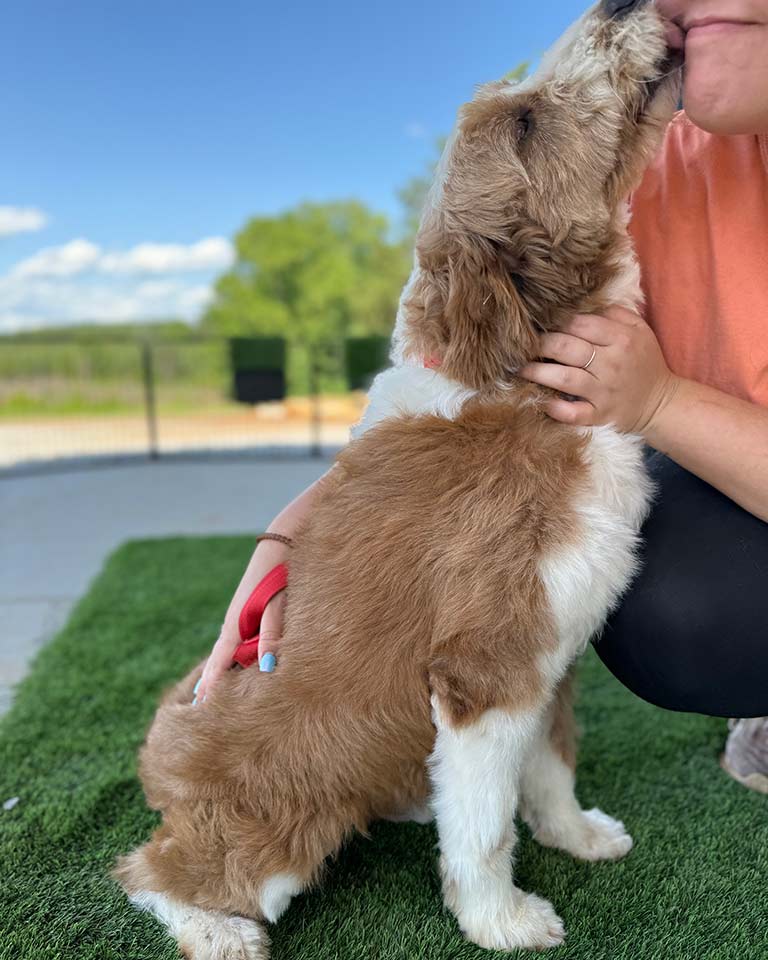
Light and intentional exercise
Senior care for doodles does not mean stopping activity. It simply means choosing movement that feels good for their joints and energy levels.
Great options include:
- Several short walks
- Swimming for joint relief
- Calm sniffing outings
- Easy fetch or gentle play
Updated nutrition
As metabolism slows, senior doodles benefit from nutrient-dense food and joint-friendly supplements. Because older dogs gain weight more easily, portion control becomes more important.
Gentle grooming
Sensitive senior skin means your doodle may tire during long grooming sessions. Keeping their coat at a manageable length and brushing gently helps them stay comfortable.
Comfortable sleep and rest
Memory foam or orthopedic beds help reduce pressure on aging joints. Many seniors sleep more deeply and wake more relaxed when they have a supportive spot of their own.
More frequent veterinary checkups
We encourage our families to shift to twice-yearly exams for dogs seven and older. Early detection of dental issues, arthritis, thyroid changes, or weight fluctuations can significantly improve quality of life.
Supporting Their Mind and Heart
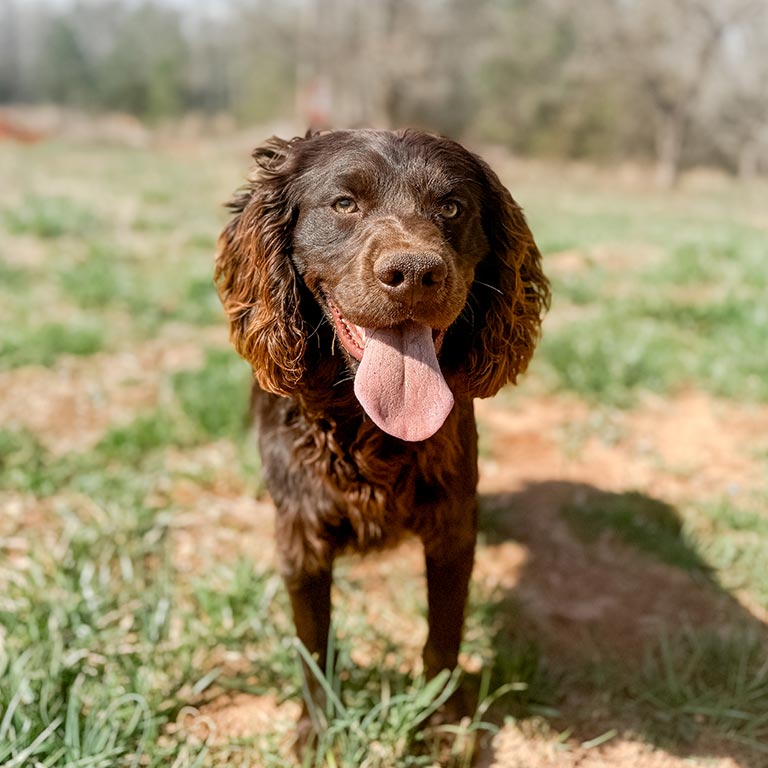
Mental enrichment
Senior doodles love soft, simple brain work. Scent games, low-difficulty puzzles, and brief refresher sessions on basic cues keep them engaged.
Emotional reassurance
Older doodles may become more sensitive to change. Quiet routines, gentle communication, and a predictable home environment help them feel secure.
Socialization adapted to their age
They still enjoy friends, but prefer calm company.
When It May Be Time To Adjust Their Routine
Keep an eye out for:
- Sudden slowing
- Avoiding stairs
- Weight changes
- Behavioral shifts
- Restlessness at night
Any rapid change should be brought to a vet’s attention.
Why We Love Our Seniors
Senior Bernedoodles and Sheepadoodles have a gentle wisdom that makes this stage incredibly special. Their personalities mellow, their loyalty deepens, and the bond you formed during their early development becomes even stronger. Senior care for doodles feels less like training a busy young dog and more like supporting an old friend who has shared years of life with you.
With thoughtful senior care for your doodle, these years can be among the most rewarding.
FAQ
How often should senior doodles see the vet?
Twice a year is ideal so your vet can catch small health changes early.
What type of exercise is best for senior doodles?
Short walks, gentle play, swimming, and sniff-based activities that keep them moving without stressing their joints.
Do doodles become more anxious as they age?
They can. Many seniors rely more on routine and reassurance, so predictable days usually help them feel secure.
Should I switch my doodle to senior food after age seven?
Sometimes. If your doodle gains weight easily or needs joint support, a senior formula can help. Your vet can guide you based on their condition.
How can I tell if my senior doodle is uncomfortable or in pain?
Look for stiffness, hesitation on stairs, slower walks, or changes in mood. Any sudden change is a good reason to check in with your vet.