
Why Do Dogs Dream? Understanding Canine Sleep Science
Why Do Dogs Dream? Understanding Canine Sleep Science
If you have ever watched your Bernedoodle or Sheepadoodle twitch, sigh, or paddle their paws during sleep, you have probably wondered why do dogs dream and what those little sleep movements really mean. Many families ask us this out of curiosity, and the answer is surprisingly close to how humans dream. Dogs dream because their brains are processing memories, emotions, and experiences from the day. Dreaming is a healthy part of a dog’s sleep cycle and an important sign of mental and emotional well-being.
What Happens in a Dog’s Brain During Sleep
Dogs move through several sleep stages, each with its own purpose. These patterns are especially noticeable in puppies and active doodles who process more daily stimulation.

REM sleep
This is the stage at which dreaming occurs. You might see paw twitches, tiny barks, rapid eye movement, or full-body wiggles. When families ask why do dogs dream, this stage explains why. It is the brain replaying and sorting information.
Deep sleep
This is the restorative phase, where the body resets. Puppies and energetic adolescents spend more time here because their bodies expend more energy during the day.
Light sleep
During light sleep, your doodle is resting but still aware of the environment. They may wake quickly or shift position upon hearing a noise.
Why Do Dogs Dream in the First Place
Memory processing
Dreams help dogs organize memories. Puppies dream the most because everything is new, from training sessions to household noises.
Emotional balancing
Dreams allow dogs to process emotions. Exciting days lead to active dreams, whereas stressful moments may manifest as quieter or more intense dream episodes.
Learning reinforcement
Training is more effective when the brain processes it during sleep. Dogs who learn new cues or experience new environments often dream more that day.
What Dreams Look Like in Doodles
Twitching paws
This often signals running, chasing, or playful memories.
Soft barks or whimpers
These sounds are normal and typically reflect dream activity rather than discomfort.
Tail movement
Tails that twitch or wag slightly may indicate positive dream content.
Body shivers
These shivers appear during deep REM sleep and are not usually a sign of cold or fear.
Should You Wake a Dreaming Dog
In most cases, no. Allowing them to sleep helps maintain a healthy sleep cycle. Abruptly waking a dog from a dream can startle them, especially puppies or older dogs in deeper sleep. If you feel you need to wake them, it is gentler to call their name softly from a short distance.
What Dreams Can Tell You About Your Dog
Dreaming shows that your doodle is getting meaningful, restorative sleep. Dogs who dream consistently tend to handle daily life more confidently because their brains sort through stimulation overnight. Puppies, busy adolescents, and well-trained dogs often have the most active dream cycles.
Does a Lack of Dreaming Mean Anything
Not always. Some dogs are simply quieter dreamers. What matters more is whether they wake rested, behave normally, and keep consistent energy levels. A quiet sleeper can still be a healthy sleeper.
Creating a Sleep Environment That Supports Dreaming
A calm sleep space
A quiet corner with minimal disruptions helps your doodle settle into deeper sleep.
Predictable routines
Dogs sleep more soundly when they know what to expect from day to day.
Exercise and enrichment
Mentally and physically satisfied dogs dream more easily and wake more rested.
Comfortable bedding
A soft bed that supports their joints encourages longer, more relaxed sleep cycles.
Why Puppies Dream More Than Adults
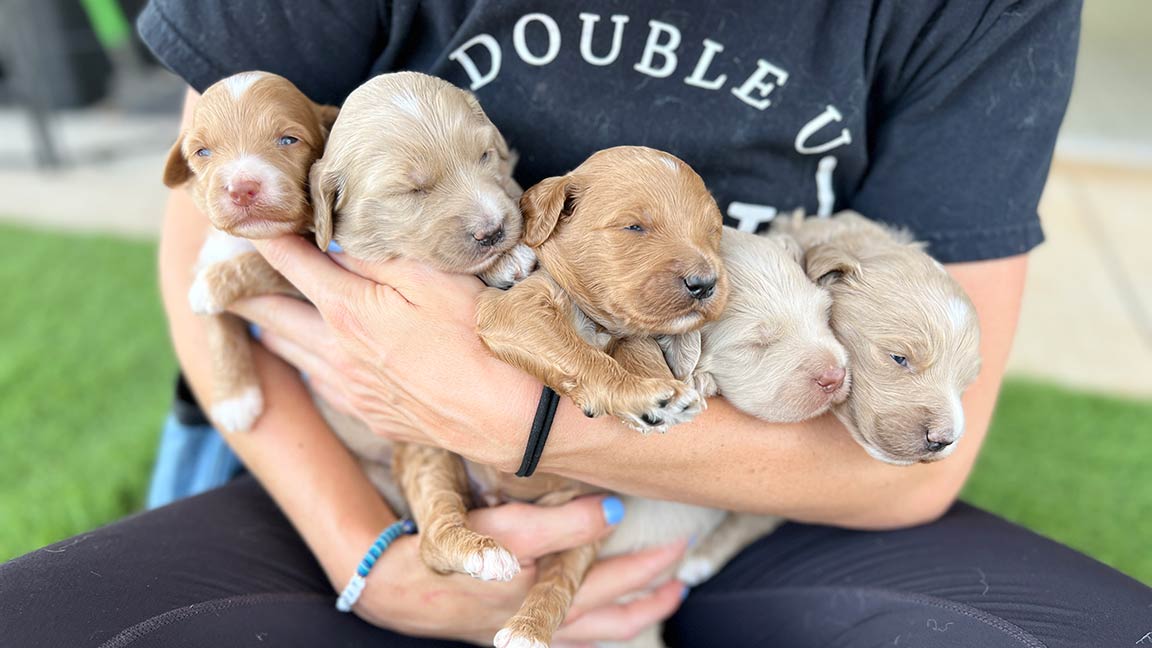
Puppies experience the world at full speed. Every new sound, cue, play session, and social experience becomes something their brains must organize. All that learning leads to more dream time, which is why you see so much twitching and soft noises when they nap.
Dreaming Through Senior Years
Senior doodles dream too, though sometimes with less intensity. As they age, their sleep patterns shift toward more frequent naps and lighter nighttime rest. Dreaming remains important for their cognitive health, comfort, and emotional balance.
Why do dogs dream: Wrapping up
Understanding why do dogs dream gives us a deeper appreciation for how dogs process the world around them. Good sleep shapes their memory, confidence, and emotional balance, from puppyhood through their senior years. If you are ready to welcome a Bernedoodle or Sheepadoodle into your home, or if you would like help choosing the right match for your family, please contact us or review our available puppies.
FAQ
Do dogs dream every night?
Most dogs dream several times per night because they enter REM sleep multiple times.
What do dogs dream about?
They often dream about familiar activities such as running, playing, training, or processing new experiences.
Should I wake my dog if the dream looks intense?
It is preferable to call their name gently rather than touch them, as physical contact can startle them during REM sleep.
Why do some dogs twitch more than others?
Younger dogs and active breeds tend to dream more intensely because they process more daily stimulation.
Is dreaming a sign of good health?
Usually yes. Dogs who dream regularly are typically getting deep, restorative sleep that supports overall well-being.